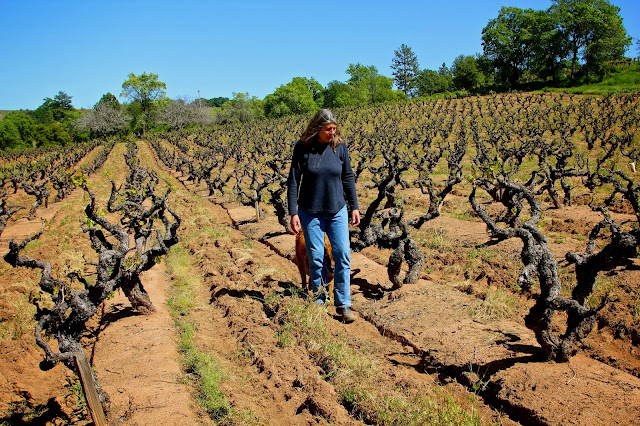
WHY DRINK ORGANIC WINES? Like organic foods twenty, thirty years ago, wines produced in organic, biodynamic, as well as vegan and sustainable fashions are emerging out of the fringe elements of commercial taste, and becoming more significant by the day. Like all wines, they give us pleasure as alcoholic beverages, make our food taste better, and sweeten our outlook on life. But exactly what are the differences that make these wines worth our attention, possibly more than non-organic wines?
First, organic, biodynamic, vegan and sustainably produced wines, meet many of our growing needs in respect to health issues. It’s funny that many of us feel the need for organic foods, but maybe not so much organic wines. But if you’re ready to make that leap, you might be pleased to know that there’s lots of good quality stuff out there for you.
Second, organics represent worthy efforts of winegrowers and winemakers to produce their products with a sense of environmental responsibility through a multitude of practices aimed at everything from soil and energy conservation to community health and safety concerns.
The third and perhaps most important factor, particularly for those of us who buy more on the basis of quality: organic and biodynamically produced wines have the tendency to distill purer expressions of grape and terroir by the very nature in which they are made; that is to say, mucked up as little as possible.
If anything, the supernova speed in which the world of wine has expanded in recent years has resulted in the inevitable: a boring, dreary sameness. Twenty years ago it was assembly line Chardonnay and White Zinfandel, fifteen years ago industrialized Merlot, and during the past decade or so the proliferation of just-another- Cabernet and Shiraz, Syrah, schmiraz… one after another, all tasting the same. Lord help us if this starts to happen with Pinot Noir
But one thing about organic and biodynamic wines: there is a tendency towards uniqueness rather than sameness. When you grow and make wine from the premise of exerting the least amount of intervention that might blur the distinctions of grape and site, you almost cannot help but produce something different, almost every time.
Before we start talking about some of the best and more interesting organic wines out in the market today, let’s explicate the basic distinctions among the various, often overlapping categories:
Wines Made From Organic Grapes
These are wines made from grapes farmed completely without the use of pesticides, herbicides or synthetic fertilizers, soil fumigants, or other chemicals. In the U.S. certified organic grapes must meet standards established by the USDA’s National Organic Program. In California even stricter standards are set by California Certified Organic Farms (CCOF); stipulating requirements such as no bio-engineering or iodizing radiation, and encouraging the use of composting, cover cropping and beneficial insects.
Organic Wines
Organic wines not only must be made from 100% organically grown grapes, they must also be vinified totally without the use of added sulfites. The USDA’s NOP (National Organic Program) specifies that even naturally occurring sulfites (found in every wine, organic or not) must be under 10 parts per million.
Biodynamic Wines
Biodynamic wines are not only farmed organically, they must meet even higher standards of sustainability by following specified preparations that help connect the “dynamic” relationship between everything in the universe, biological and spiritual. Most of these principles are based upon the homeopathic farming methods established by an Austrian philosopher named Rudolf Steiner in the 1920s; and today, certified internationally by The Worldwide Demeter Association (in the U.S., by the Demeter Association, Inc.). While many aspects of biodynamic viticulture (like the burying of manure stuffed cow horns in the vineyard) might seem a little loony, contemporary proponents are very comfortable with most of its practicalities; such as use of on-site produced compost and manure, the emphasis on ecosystem diversity, incorporation of animal life, and even cultivation according to “natural” cycles (i.e. solar and lunar calendars).
Vegan Wines
Wines meeting Vegan standards must be vinified without the use of animal products; particularly filtering and fining agents such as egg whites, casein (a milk protein used to soften wine), gelatin (removes bitter phenolics) and isinglass (derived from fish swimbladders). Instead, Vegan wines are typically clarified by non-animal products like bentonite clay.
A QUALITY (RATHER THAN GREEN) REVOLUTION
In California there are now some 12,000 acres of vineyards certified by third party organizations like CCOF (less than 5% of the state’s total), and nineteen wineries certified for Organic Wines. It is worth noting, though, that well over 90% of vineyards up and down the West Coast are probably farmed sustainably, without any certification. The days of routine, rampant use of chemicals are long gone, and practices like cover cropping to establish organic mulching and foster beneficial insects have become pretty much standard practice.
A number of certified organic growers, like John Williams of Napa Valley’s Frog’s Leap, are as blasé about the organic monikers as non-certified growers. Explaining why he has never marketed his immensely popular wines as “organic,” Williams says “my bottom line is wine quality, not the organic movement’s ‘save the world’ agenda… grapes from clean, healthy vines just make the best possible wine, and that’s what I’m after.”
Qualification for Organic Wines – the total shunning of sulfites during the fermentation process or to stabilize wines at bottling – is another step Williams finds unnecessary. “Although we are constantly trying to use less, we just haven’t found wines made without sulfites that consistently excite us… nor do we find compelling evidence that the minute use of this natural ingredient should be troubling to anyone for reasons other than philosophical.”
While über-growths such as Spottswoode, Rubicon, and Araujo have gone through the rigorous three year certification process required by CCOF, other highly lauded producers farm organically as a matter of course, not cause. Shafer, for instance, has long been a champion of sustainability and bio-diversity; but if a serious disease is detected, according to Doug Shafer, he reserves last resort options such as low-toxicity herbicides like Round-Up. Bruce Neyers’ home estate in Conn Valley (east of Rutherford in the Napa Valley AVA) has been farmed 100% organically since 1998, but the only reason his vineyard is not certified is because it borders a non-organic vineyard.
Up on Sonoma Mountain Patrick Campbell of Laurel Glen also farms organically, but tells us he flatly refuses to seek certification because:
- “In the case of severe mildew or rot pressure, there are no reliable organic remedies – this pressure is not normal, of course, but can happen in unusual weather conditions – and simply losing crop for adherence to organic principles is not an option for me.
- “Organic has become a marketing concept.
- “I don’t like the idea of getting commercial benefit for doing the right thing.
- “Most importantly, sustainability is a far more significant and global statement of environmental concern than organic, and this is what we promote. Organic farming can, for example, use up a lot of fossil fuel or human health.”
During the past month I have been making a concerted effort to taste as many organic, biodynamic and vegan wines as possible, and have found as many winners as losers – in other words, a pattern no different than with any other wines. The following are the ones I found most exciting; wines (all retailing between $10 to $50) I’d drink anytime, any day, anywhere: AMERICAN WHITES
2007 Frog’s Leap, Rutherford/Napa Valley Sauvignon Blanc (organic grapes) – Crystal clear, fresh, green melon aroma with herby, grassy undertones; lemony crisp entry, become round, soft, long and slender in the middle, finishing with a light lemon and honeydew fruitiness.
2006 Paul Dolan, Mendocino Chardonnay (organic grapes) – Ripe, slightly tropical fruit aroma with creamy oak embellishments; medium-full, crisp and fruit-forward on the palate; finishing soft and lush.
2007 Frog’s Leap, Napa Valley Chardonnay (organic grapes) – Subtle but fresh, deftly delineated nose of stony minerality, crisp apples, slivers of toasted oak and subtle, tropical, pineapple-like fragrances; on the palate, an unusual crispness of lemon and apple flavors, a vanillin oak texture, and balanced, medium-full body, finishing lithe, multifaceted.

IMPORTED WHITES
2007 Holmes, Sauvignon Blanc (New Zealand; organic grapes) – Classic New Zealand nose – green herby, slightly peppery, and grapefruity fresh – followed by crisp, fine, silky, lemony dry and refreshing flavors.
2007 Mont’ Albano, Pinot Grigio (Friuli Grave, Italy; organic grapes, vegan) – Stony, yeasty nose with lemony perfume; good and dry, finely textured, crisp, minerally flavors, lingering light and easy; pass the antipasto.
2007 Meinklang, Grüner Veltliner (Austria; biodynamic) – This would not be the biggest, most complex Grüner Veltliner you might find on the market; but ounce per ounce (just $12 retail), you won’t find a better buy; fresh lemon and lime on the palate, with a distinctive flintiness in the nose and on a light, breezy palate; finishing lightly tart, utterly fresh.
2006 Domaine Ostertag, Vignoble d ‘E Riesling (Alsace, France; biodynamic) – Vivid lime, flinty minerals and hints of toasted almonds in a flower perfume; the citrus and minerals dominating in a medium-full body, with a long, mouthwatering zest, without being tart or sharp.
2006 Domaine Guillemot-Michel, Mâcon-Villages (France; biodynamic) – As pure and lascivious a Burgundian style Chardonnay you will find; a nose of sweet, yeasty apples with slightly tropical, honeyed notes; the green apple qualities becoming emphatically stony on the palate, lightened by fresh, lemony crispness.
AMERICAN REDS
2007 Organic Vintners, Mendocino Pinot Noir (organic grapes, vegan) – Totally clean, lush, pure, sweet berry jam aroma with vanillin oak and peppermint leaf nuances; unabashedly soft, lush, juicy qualities on the palate; ready to drink now, while still young, plump and palpitating.
2006 Frey, Masut Vineyards Sangiovese (Mendocino; organic wine) – Black cherry/rhubarb pie nose with cracked peppercorn and peppermint spices; soft, fruity entry and good, zesty, spicy middle; finishing light, with easy tannins; nothing special, although a pasta in tomato primavera might prove otherwise.
2006 Frog’s Leap, Napa Valley Zinfandel (organic grapes) – Compellingly rich, aromatic, sweet raspberry nose; luscious, jammy, zesty, bright berry fruitiness in a silky smooth, medium sized body; not “big” in size, but perfectly big in terms of its classic Zin profile.
2005 Parducci, True Grit Mendocino Old Vines Petite Sirah (organic grapes) –The Mendocino Wine Company (owner of the Parducci as well as Paul Dolan labels) applies both organic and biodynamic growing regimes. The color here is black and blue, and the nose deep and intense; studded with blueberry, blackberry, roasted coffee, toasted oak and sweet, balsamic-like nuances. Thick, bouncy, juicy qualities on the palate; the aggressive fruitiness wrapped in vanillin and dill-like oak, plumped out by slightly chewy, wham-bam tannin.
2004 Saracina, Mendocino Syrah (organic grapes) – A literal larder of twiggy herbs, hard spices, violets and liqueur-like blackberry sweetness in an aggressive nose, filled out by toasty oak; dense, full throttled weight and tannin, punching out sinewy, smoky flavors, finishing with more bang than finesse.
2006 Casa Barranca, Arts & Crafts Red (Central Coast; organic wine) – Proof positive that zero-sulfite wine can be fresh and clean on top of unfettered; classic Merlot fruitiness and framework (blended with 25% Cabernet Sauvignon); plump red fruit and smoky oak nuances in the nose; perfectly rounded, fleshy, velvety feel on the palate, finishing with a luscious, drink-now fruitiness.
2006 Frog’s Leap, Rutherford/Napa Valley Merlot (organic grapes) – Merlot always should be (but not always is) like a plush, sinking sofa of black cherry flavor, and this Frog’s Leap has that in spades; the round, juicy flavors softened by restrained vanillin oakiness, filling the palate; or rather, bouncing merrily across with sustained poise and energy from beginning to end.
IMPORTED REDS
2006 Ventura, Syrah (Lontué Valley, Chile; organic, vegan) – Sweetly floral, violet-like nose punctuated by peppercorn spice and a whiff of leafy herbiness; on the palate, rich, round and easy medium-full body, with good flesh and fruit-forward qualities.
2006 Nuevo Mundo, Cabernet/Carmènére Reserva (Maipo Valley, Chile; organic grapes, vegan) – Dense, purplish ruby and a rich, juicy, spiced berry nose with jalapeño-like potency; medium-full, fleshy feel with rounded tannins at the center, carrying the sweet berry and peppery flavors into a pliant finish.
2008 Pircas Negras, Malbec (Famatina Valley, Argentina; organic, vegan) – Big nose, bursting with brambly raspberry/blackberry fruitiness; snappy feel and medium weight, the luscious fruit driving through a lip smacking finish; and finally, to boot, a stupidly good (about $12) price.
2006 Kawarau Estate, Pinot Noir (Central Otago, New Zealand; organic grapes) – Intense, billowing nose of crushed cherries, spiced fragrances, and toasty French oak; firm, youthful tannins hanging on along with a beefy, round, red fruit qualities, but falling away as the deeply extracted flavors penetrate through a long, zesty finish; genuinely world class quality.
2007 Weingut Michlits, Pinot Noir (Burgenland/Osterreich, Austria; biodynamic) – Lovely, lush, juicy nose, redolent of fragrant wild strawberries; burst of juicy, persistent Pinot Noir fruitiness on the palate; soft yet firm and lively with acidity – like a black haired waif in skintight dress – without being lean, rough, hard, or tart.
2006 Meinklang, Zweigelt (Austria; biodynamic) – Bright, purplish pigments and sweet raspberry/blackberry nose, direct, expressive, and fairly intense; soft, fruity entry couched in soft tannins, the flavors finishing fresh and easy.
NV Organic Vintners, Tinto (La Mancha, Spain; organic grapes, vegan) – 100% Tempranillo; richly aromatic, with black fruit and licorice, with an earthy, smoked meatiness; rich, soft flavors propped up by moderate, rounded tannins, finishing long, almost sweetly fruity.
2005 San Vito, Chianti (Toscana, Italy; organic grapes, vegan) – 100% Sangiovese; super nose of honeyed red berries and a pungent, earthy smokiness, suggesting fresh, oily, extra-dark roasted coffee beans. On the palate, the strawberryish fruitiness punches through the smoke, zapping the palate with fresh, easy, buoyant qualities.
2005 Erbaluna, Nebbiolo (Langhe/Piemonte, Italy; organic grapes, vegan) – Savory spice nose, with fennel and cranberryish fruit; snappy, medium sized body, firming tannins framing flavors of zesty berries and dried, spiced, caramelized beef.
2006 Scagiola, Frem Barbera d’Asti (Piemonte, Italy; biodynamic) – Deep, vivid, dark ruby color leading to a compact, concentrated blackberry/black cherry nose; deep, dense, thick on the palate with slightly hard tannin edges offset by almost sweetly concentrated flavors; good, lip smacking (but not sharp) acidic zip, prolonging the sweetness on the palate.